
Crazy Time Wheel – How the Wheel Works, What’s on It, and Why Everything Starts Here
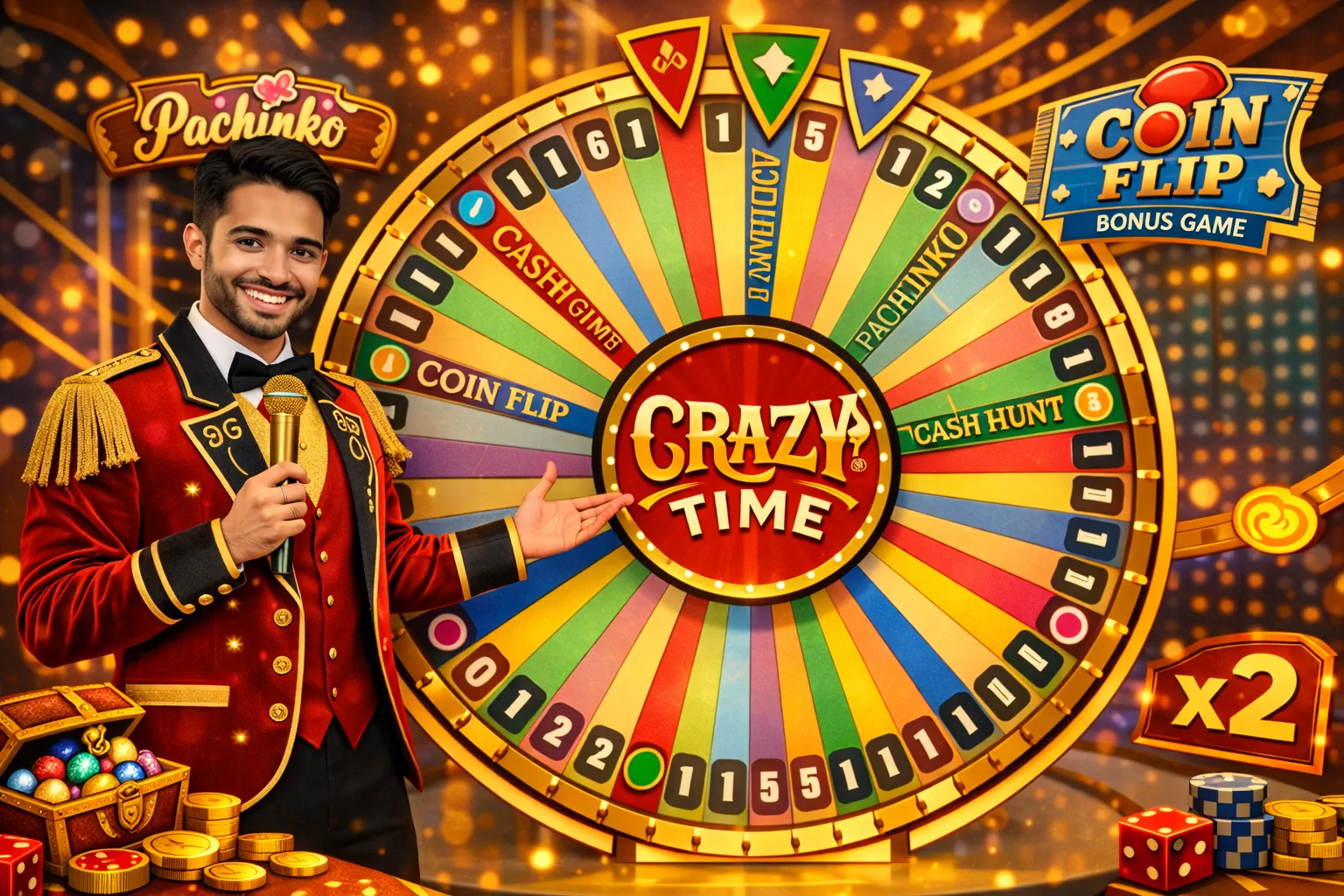
If you strip away the presenter, the bonus noise, the lights, the near-misses, the crowd energy, the whole game-show madness . . . you are left with one thing:
The Crazy Time wheel.
That’s the heart of the game. The real engine. Everything else hangs off it.
And honestly, a lot of beginners do this backwards. They jump straight into bonus rounds, multipliers, “best strategies,” mobile betting, all that jazz — without first understanding the wheel itself. Bad move. Because if you do not understand what is actually on the wheel, how it is structured, and why certain results matter more than others, the rest of the game feels like colorful chaos. Entertaining chaos, sure. Still chaos.
So this article is about the wheel. Properly. Not in some stiff casino-manual tone. Just a practical guide for Bangladesh readers who want to understand what the Crazy Time wheel is, how it works in live play, what the segments mean, how the wheel shapes the pace of the game, and why mobile users should care about wheel visibility more than most bonus-hungry guides admit.
Because they should.
Overview of the Crazy Time Wheel
The Crazy Time wheel is the central game element in Crazy Time. Before every round, players place bets on specific segments of the wheel, then the presenter spins it, and the final landing decides the result.
Simple enough. That’s probably why so many people get overconfident with it.
The wheel contains a mix of standard number segments and bonus game segments. If it lands on a number, the round resolves as a normal outcome. If it lands on one of the bonus sections, the game jumps into a special feature round like Coin Flip, Cash Hunt, Pachinko, or Crazy Time.
That means the wheel does more than just “spin.” It controls the entire structure of the session. It decides whether the round stays plain or explodes into something bigger. Every decision starts there. Every result ends there too, at least at first.
Here is the short version:
| Wheel element | What it does | Why it matters |
|---|---|---|
| Number segments | Produce standard round outcomes | Base of the game flow |
| Bonus segments | Trigger feature rounds | Add excitement and volatility |
| Spin result | Decides what happens next | Main moment of every round |
| Wheel layout | Shapes betting choices | Affects how beginners read the game |
| Visible history | Shows past wheel outcomes | Helps players follow the session |
That’s the skeleton. The rest is feel, rhythm, and understanding what you’re actually looking at.
What Is the Crazy Time Wheel?
The wheel is the main live game object that players bet on before each spin. It is large, visual, impossible to ignore, and designed to pull all the attention toward itself when the presenter gets the round moving.
Which is exactly what it should do.
The Wheel as the Centre of the Game
Crazy Time is not a card game with a wheel attached as decoration. The wheel is the game. That distinction matters. It decides whether your bet lands on a standard number result or launches into a bonus feature. Without it, there is no Crazy Time as people know it.
That is why understanding the wheel should come before obsessing over the flashy stuff. If you only focus on the bonus rounds and ignore the wheel layout, you are learning the game upside down.
A lot of people do, by the way.
Why New Players Focus on the Wheel First
Because that is the smartest place to begin. Before you worry about bonus stats or result history or whether a multiplier just flashed in some dramatic way, you need to know what the wheel actually contains.
What are the number segments?
Where are the bonus segments?
How does a round move from bet placement to spin to outcome?
Once those basics are clear, everything else gets easier. Not magically easy, just less messy.
How the Crazy Time Wheel Works
At a surface level, the wheel is easy to explain. At a real-user level, it deserves a bit more attention.
Betting Before the Wheel Spins
Before each round starts, the betting window opens. During that time, players choose which wheel segments they want to back. Some prefer number segments. Some focus on bonuses. Some mix both because they want a bit of structure and a bit of chaos. Fair enough.
Then betting closes.
After that, the presenter spins the wheel and the result is out of the player’s hands. This is one of the reasons the wheel matters so much. Once the spin begins, all the decision-making is over. What remains is the landing.
For beginners, especially on mobile, this is where the experience should stay simple. If you cannot clearly see the wheel and understand what you bet on before the spin, the session gets confusing very quickly.
The Landing Decides the Round
This part is blunt and beautiful. The wheel lands where it lands.
If it stops on a number segment you backed, that is your result. If it lands on a bonus segment you backed, you go into the corresponding feature round. If you did not back the landed segment, you watch and move on.
That’s it. No hidden follow-up. No “almost counted.” No emotional argument with the wheel because it slowed near your segment and then slipped away at the end. Near-misses mean nothing in practical terms, even though they absolutely get under people’s skin.
That little sting? Very real.
Main Number Segments on the Crazy Time Wheel
The number segments are the standard result areas on the wheel. They are less glamorous than the bonus rounds, obviously, but they are the structure holding the whole game together.
Why Number Segments Matter More Than People Admit
People love talking about Coin Flip and Pachinko and the rest. Great. But the number segments are what define the ordinary rhythm of the game. They are the reason a session has a base flow at all.
A player who ignores the number side of the wheel usually ends up seeing the game in a distorted way. Everything becomes “bonus or disappointment,” which is not a very healthy frame. Or a very accurate one.
Number segments matter because they are the regular outcomes that most clearly show how the wheel is behaving in real time. They also make the wheel easier for beginners to understand because the result path is direct. No feature transition. No extra layer. Just spin, land, resolve.
Why Beginners Often Learn Faster Through Number Outcomes
Because number outcomes are clean. If you are still learning the Crazy Time wheel, the number segments help you see the relationship between the betting board and the final landing without too much bonus noise getting in the way.
That clarity matters. Especially during the first few sessions, when everything still feels slightly overlit and louder than necessary.
Here is a simple breakdown:
| Segment type | What it means | Best use for beginners |
|---|---|---|
| Number segment | Standard wheel outcome | Learning the basic round flow |
| Bonus segment | Triggers a feature game | Understanding the special side of the wheel |
| Mixed coverage | Betting on both types | Experiencing both without going all-in on confusion |
Bonus Segments on the Crazy Time Wheel
This is where the wheel becomes more than just a wheel. This is where it becomes Crazy Time.
The Four Bonus Segments
The Crazy Time wheel includes four main bonus segments:
- Coin Flip
- Cash Hunt
- Pachinko
- Crazy Time
These are visible on the wheel during normal play. If one of them lands and you placed a bet on that segment before the spin, the game moves into that bonus feature.
Each one has its own character. Coin Flip feels quick. Cash Hunt feels busy and playful. Pachinko brings tension. Crazy Time is the big branded showpiece. But they all begin the same way: the wheel lands there.
Which is why the wheel is still the real gatekeeper of the bonus experience.
Why Bonus Segments Pull So Much Attention
Because they interrupt the ordinary rhythm. A number result ends the round in a standard way. A bonus trigger changes the whole mood. Presenter reaction changes. Visuals shift. Players pay closer attention. The stream suddenly feels more alive.
That interruption is powerful. It is one reason people get emotionally attached to certain parts of the wheel. They stop seeing the wheel as a full structure and start seeing it as a map of hopes. Dangerous little habit, that one.
Still common.
Here’s a clear comparison of the bonus areas:
| Bonus segment | General feel | What players usually expect |
|---|---|---|
| Coin Flip | Quick and direct | Simple bonus moment |
| Cash Hunt | Bright and playful | Strong visual feature |
| Pachinko | Suspenseful | Tense, watchable build-up |
| Crazy Time | Main event | Biggest feature atmosphere |
Top Slot and Multipliers on the Wheel
This is where beginners often start getting confused, because the wheel itself is already easy enough to grasp, then extra mechanics come in and muddy the picture.
What the Top Slot Adds
The top slot mechanic can assign multipliers to certain segments before the final wheel result is determined. If the wheel then lands on one of those selected segments, the multiplier becomes part of the outcome.
That makes the wheel feel more charged. More dangerous too, in an emotional sense. Players see the multiplier involvement and instantly start thinking the round matters more than usual. Sometimes it does, practically speaking. Emotionally, it almost always does.
Why Multipliers Change the Mood of the Wheel
Because they turn normal anticipation into sharper anticipation. It is one thing to watch the wheel land on a standard segment. It is another to watch it slow down near a boosted segment that could trigger something bigger.
This is why the wheel is never just a passive visual object. It carries tension before the result even arrives.
And yes, players often romanticize multipliers way too much. They start reading destiny into them. Not a wise move.
How the Wheel Shapes the Pace of the Game
The wheel does not only decide outcomes. It controls the emotional tempo of the session.
Fast Rounds, Fast Reactions
Crazy Time is a quick game. Betting opens, closes, the presenter spins, the wheel lands, and the next round is never that far away. The wheel sits at the center of all that motion. It is the thing everybody watches as the session breathes in and out.
A fast wheel game creates a fast mental rhythm. That is why people sometimes lose track of time in live sessions. One spin melts into the next. A bonus almost lands. A multiplier flashes. Another round opens. Off you go.
The wheel keeps dragging the eye forward.
Why the Wheel Makes the Game Feel More Alive
Because motion matters. Static interfaces feel dead after a while. A live wheel spinning in front of a real presenter feels immediate. Even if the round outcome remains chance-based, the wheel makes that randomness feel theatrical.
That is a big part of the game’s appeal. The wheel is not just functional. It is dramatic. Purposefully so.
Crazy Time Wheel on Mobile
This section matters a lot for Bangladesh readers because mobile play is not some side issue. It is the main way a lot of people experience the game.
Why Wheel Visibility Matters on a Small Screen
If the wheel looks cramped, blurry, or badly framed on mobile, the whole game suffers. Not just the visuals — the actual usability. You start missing the feeling of the spin. You lose some of the clarity around where it landed. Bonus triggers feel less satisfying. The whole thing becomes more annoying than exciting.
A good mobile setup should let you clearly see:
- the wheel itself,
- the segment layout,
- the final landing area,
- the transition into any bonus round.
That seems basic. You would be surprised how often poor layouts ruin exactly those things.
Browser or App — What Really Matters
I think people overtalk this. Browser or app can both be fine. The real questions are:
- Does the stream stay stable?
- Is the wheel readable?
- Does the betting panel cover too much of the screen?
- Can you move between viewing and betting without fumbling?
That is what shapes the wheel experience on mobile. Not some slogan about “premium app design.”
Here is a mobile-focused wheel table:
| Mobile factor | Why it matters for the wheel | Better player experience |
|---|---|---|
| Stable stream | Keeps wheel motion smooth | Easier to follow the landing |
| Clear framing | Makes segment layout readable | Better understanding of results |
| Clean interface | Stops controls from crowding the wheel | Less frustration on small screens |
| Fast response | Helps during pre-spin betting | Smoother round entry |
| Good visual contrast | Makes the wheel easier to track | Better mobile comfort |
Why the Crazy Time Wheel Appeals to Players
Because it turns a simple concept into a spectacle without making it impossible to understand.
That’s harder to do than it sounds.
The Wheel Is Easy to Read but Hard to Ignore
A beginner can understand the basic idea quickly: bet on a segment, watch the wheel spin, see where it lands. That simplicity is powerful. But the presentation gives it enough energy that it never feels flat. The wheel always looks like something important is about to happen, even in plain rounds.
That is good design, whether people admit it or not.
The Wheel Creates Shared Tension
This matters more in a live game than in a standard digital one. Everyone watching is focused on the same moving object. The presenter is watching it. The players are watching it. The whole round narrows down to where the wheel will stop.
That shared tension is part of why the game has so much pull.
Not magic. Just well-built live pacing.
Common Mistakes Players Make When Reading the Wheel
People get weird around wheels. I mean that affectionately, but still.
Treating Near-Misses Like Signals
The wheel slows near a bonus segment, then slides past it. Players groan. Fine. Human. But then some of them start talking as if the wheel is “getting closer” or “warming up” to that segment.
No.
A near-miss is emotionally powerful and practically meaningless. The wheel did not almost decide something. It decided something else.
Ignoring the Wheel Layout Entirely
Some players are so obsessed with bonus rounds that they barely process the wheel as a whole. They just stare at one or two segments and emotionally camp there. That makes the game harder to understand, not easier.
The wheel is a full structure. Read it like one.
Confusing Visibility with Control
Because the wheel is live and visible, some players start feeling like they are more connected to the result than they really are. As if watching closely gives them some deeper relationship to the outcome.
It doesn’t.
The visibility makes the game easier to follow. It does not make it predictable.
Why the Crazy Time Wheel Appeals to Bangladesh Users
Because it is visual, direct, and mobile-friendly when presented properly. Bangladesh users often prefer straightforward gameplay concepts and easy-to-follow live formats, and the wheel delivers that better than many cluttered casino games do.
You look at it and you get the basic idea quickly. That matters.
There is also the mobile side. Many players in Bangladesh access live casino content on their phones, so the wheel’s strong visual identity helps a lot. It is easier to follow than some table games that depend on tiny details or crowded layouts. If the stream is stable, the wheel does a lot of the explanatory work by itself.
That kind of usability is underrated.
Practical Expectations from the Crazy Time Wheel
So what should a player realistically expect from the wheel?
Expect it to be:
- the main decision point of the game,
- the source of all standard and bonus outcomes,
- visually strong in live play,
- central to how the game feels on mobile.
Do not expect the wheel’s visibility to give you hidden insight into future results. Do not expect near-misses to mean something. Do not expect a dramatic spin to be more meaningful just because it felt emotional.
The wheel is the centre of the game, yes. It is not a fortune-teller.
Responsible Play and Session Control
Because the wheel is so visually engaging, it can pull people into a very reactive style of play. One near-bonus landing, one dramatic slowdown, one boosted segment, and suddenly the next round feels “important.” That is where discipline starts leaking out.
So if you are playing with real money and thinking in BDT, keep the session grounded.
Set a budget before you start.
Decide how long you want to play.
Do not let the emotional movement of the wheel convince you that the next spin deserves a bigger stake.
That feeling is ancient. And expensive.
The smartest way to approach the Crazy Time wheel is to respect what it is: the beating heart of the game, the thing everything revolves around, and also a live random mechanism that does not care what story you are telling yourself about the last three spins.
Frequently Asked Questions about the Crazy Time Wheel
What is on the Crazy Time wheel?
The wheel has a mix of standard number segments and four main bonus sections: Coin Flip, Cash Hunt, Pachinko, and Crazy Time. On top of that, multiplier action can also come into play through the top slot feature, which makes some spins feel a lot more charged.
Is the wheel the most important part of Crazy Time?
Yes, no question. The wheel is basically the heart of the game. Every round begins with choosing segments on it, and every outcome depends on where it stops. Without the wheel, there is no Crazy Time as players know it.
Can I follow the Crazy Time wheel on mobile?
Yes, usually pretty comfortably, as long as the stream is smooth and the screen layout is not a mess. On a good mobile setup, the wheel should stay clear enough to follow the spin, spot the landing area, and see when a bonus round has been triggered.
Does understanding the wheel improve my chances?
Not in the “change the result” sense — the wheel is still part of a chance-based game. What understanding it does help with is making the whole session feel less confusing. You see what you are betting on more clearly, you follow the round better, and you feel more in control of your decisions, even though the outcome itself stays random.